

In the past couple of weeks, I accidentally fell into an exploration of what the traditional advice to “keep the corners engaged” really means to me.
In hindsight, I’ve realized that I’ve had a rather static concept of the meaning of “engaged corners.” The muscles at the corners of the mouth engage, and remain engaged, keeping the corners in a fixed position. But I didn’t have a good sense of what this engagement really does to help me play.
Lately, though, I’ve been trying to understand better how corner engagement is supposed to benefit my playing. I have found myself focusing on the effect on my bottom lip.
I have discovered that engaged corners can, if I am paying attention, prevent my bottom lip from sagging, by holding it up from the sides. I now understand better my tendency to let my bottom lip sag as I play, especially when moving down and then back up in the range. The sagging bottom lip spreads the aperture, resulting in an airy, less focused sound.
If I think of using corner engagement more dynamically, for the purpose of stabilizing my bottom lip, then I get better results. My tone stays focused. I can move up and down the range with much less aperture change. My downward slurs land solidly, with improved pitch stability for the bottom note.
Here are some specific examples from my recent experience. In this articulation exercise, which requires agile movement up and down the range, my aperture is more stable, and my tone stays consistent throughout, with less effort.
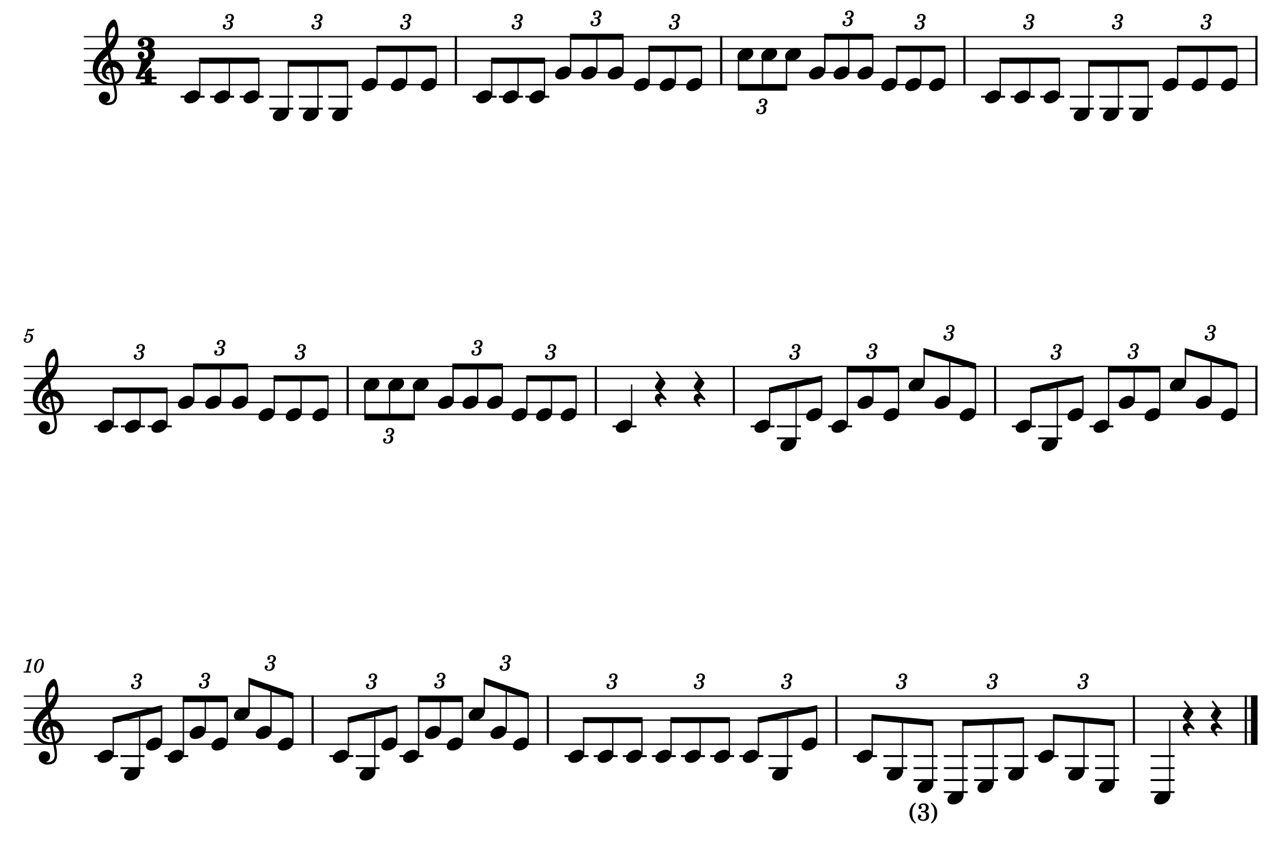
A harmonic series articulation exercise. Source: Scott Leger Horn YouTube channel
In this large-interval slur exercise, my slurs have been more accurate and stable.

Slow, large-interval slurs. From Teuber, Progressive Studies in Flexibility and Range Development for French Horn, exercise no. 22.
In the second and third measures below, I was losing tone focus. The problem was that my bottom lip was sagging, just a bit, with each downward dip to C♯ or C. Once I started using the corners to stabilize the bottom lip, tone focus improved.

From Courante, Bach Cello Suite no. 1, Wendell Hoss edition for horn.
Finally, in a recent woodwind quintet rehearsal, I was pleased with the improved stability of this slur from C down to F♯.

From Nielsen Quintet Op. 43, horn part.
To read about a variety of approaches to embouchure formation and the use of the corners, see “Hornmasters on the Geometry of the Lips and Corners,” by John Ericson. John quotes from Farkas, Schuller, Fox, Berv, and Bushouse, with references also to works by Cousins and Reinhardt.